
Time to public service
Measure transport, leveling, power-up, network activation and opening the module to citizens or crews.
Procurement Path
Large buyers need more than a strong concept. They need a repeatable way to test, specify, finance, train and deploy the same infrastructure across many locations.
Procurement Path
Large buyers need more than a strong concept. They need a repeatable way to test, specify, finance, train and deploy the same infrastructure across many locations.
Start with one module at a shelter, town square, hospital, camp gate or event site and document deployment time, usage and operating model.
Translate the pilot into small, large and specialist packages for blackout, flood, wildfire, humanitarian and crowd-safety missions.
Build simple handover routines for transport, setup, public access, network operation, charging, lighting and redeployment.
Procure fleets by corridor, municipality, venue portfolio, border region or national reserve and redeploy them as incidents move.
30-day pilot scorecard
A serious fleet buyer needs evidence that survives budget, legal, IT, operations and public-safety review. The first deployment should be designed to create the file that unlocks the next 100 units.
Request pilot scorecardMeasure transport, leveling, power-up, network activation and opening the module to citizens or crews.
Track uptime, charging sessions, satellite communication status, queue load and operator handover during realistic use.
Validate who owns transport, setup, public information, support desk, security and redeployment.
Convert pilot data into fleet sizing assumptions, acceptance criteria, service scope and framework language.
Arrival, leveling, power, network, signage and first public service are timed and photographed.
Charging, portal use, queue pressure, lighting hours and staff workload are logged by scenario.
The pilot names the agency, partner and service roles needed for a repeatable fleet model.
The report recommends fleet quantity, mission package, service rhythm and next procurement route.
Buying Center
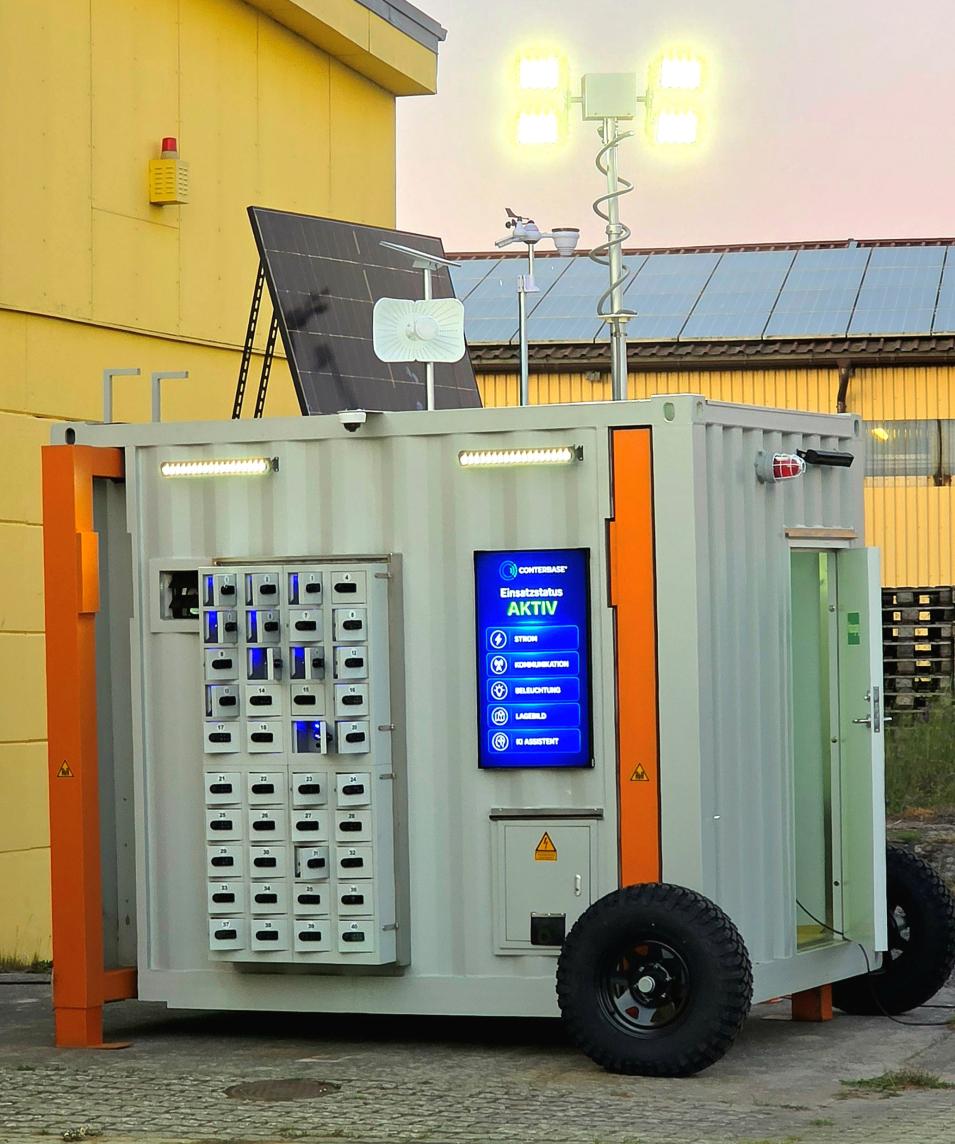
Conterbase is strongest when it becomes shared crisis infrastructure: a capital asset that civil protection, responders, operators, venues and humanitarian teams can all use instead of buying isolated one-off equipment.
Public charging, information, shelter support and visible local continuity during outages and evacuations.
Forward command, scene lighting, local networks, radio workflows and weather-aware situational awareness.
A recognizable service point for displaced people, registration, device charging, hygiene options and staff handover.
Mobile power, connectivity and public interface near damaged grids, water systems, hospitals, ports or transport nodes.
A deployable help point for telecom overload, severe weather, access control, lighting and emergency messaging.
Standardized fleets that can move between regions, support international aid and remain useful across many crisis types.
Fleet economics
Large fleets become easier to approve when they consolidate spend that is already scattered across generators, public charging, temporary information access, lighting, information points, event safety and humanitarian support.
Build budget caseCivil protection, utilities, event operators and humanitarian programs can co-justify the same fleet instead of defending isolated purchases.
The same containers can support seasonal floods, wildfire standby, festivals, public outages, exercises and international relief.
A repeatable platform reduces the hidden cost of many different field kits, improvised suppliers and mission-specific workflows.
Usage, setup time, uptime, queue load and service hours can be documented and reused in funding memos and framework agreements.
How buyers can buy
Million-unit growth needs more than one price list. Conterbase can be sold as owned infrastructure, a regional reserve, an event rotation fleet, a partner-operated service or a humanitarian package.
Design commercial modelTender and rollout readiness
Global buyers need a path from promising pilot to repeatable procurement. Conterbase can be specified as a platform with variants, operating assumptions, training scope and service packages.
Define unit variants, interfaces, acceptance criteria, documentation and optional mission packages for public procurement.
Adapt generator intake, grid interfaces, solar options, thermal control and rugged kits to regional operating conditions.
Branding, signage, emergency portal language, wayfinding and public instructions can match local agencies and communities.
Build handover, maintenance, spare-parts and operator routines around the same deployment model for every unit.
Combine satellite communication, digital signage and secure operations networks according to local responder and data requirements.
Plan staging, relocation, reserve logic and multi-region dispatch so containers move where demand is highest.
Assurance layer
A global crisis platform has to survive more than a product demo. Conterbase can be packaged with the governance, documentation and operating evidence that public buyers need before they approve fleets.
Request assurance packFrame the platform around non-weaponized public support, responder workflows and services for affected people.
Separate public information access, operations networks, device management and satellite communication assumptions for local security review.
Document power intake, queue zones, signage, lighting, access control and setup routines for mixed public environments.
Define inspection cycles, spare-parts logic, service partners and training refreshers before fleet rollout.
Version specifications, acceptance criteria, options and localization rules so every region buys the same core platform.
Capture deployment time, uptime, charging sessions, portal usage, queue load and service hours to defend expansion.
Decision room
A champion may love the module, but million-unit growth is won in approval rooms. Conterbase should give finance, legal, IT, operations, humanitarian and procurement teams a concrete answer before the next meeting.
Request board memoOne fleet consolidates public charging, satellite communication, lighting, information, logistics and service into a reusable asset with higher utilization across crises, events, drills and reserves.
The operating model is built around trailer transport, hydraulic leveling, repeatable handover, visible public access zones and the same training rhythm for every unit.
Public information access, responder operations, device management and satellite communication assumptions can be separated, documented and reviewed before a pilot becomes a framework.
A standardized public face, signage, lighting, queue logic and multilingual information turn the container into a recognizable civic support point.
The platform is framed as non-weaponized civil infrastructure: charging, information, staff workflows, hygiene options, reporting and visible services for affected people.
The pilot creates acceptance criteria, mission variants, service assumptions, training scope and framework language that can be reused by every region.